Stripe vs Razorpay for Indian Freelancers (Local Client Payments)
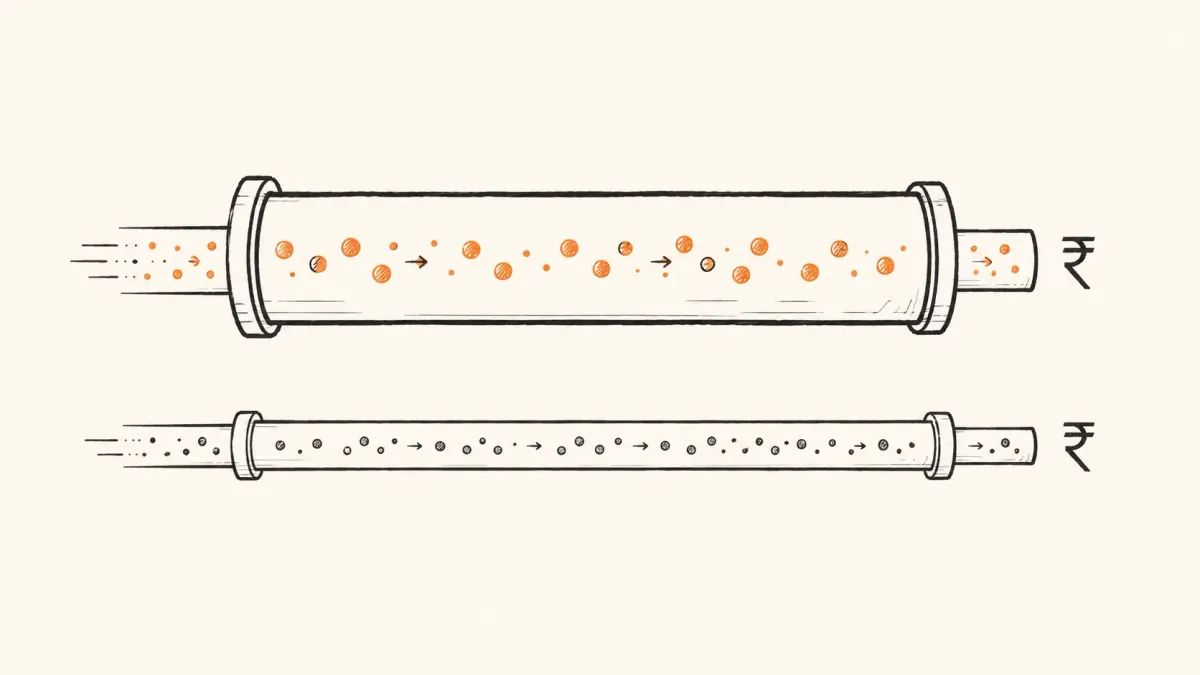
Most Indian freelancers pick their payment processor based on a comparison that doesn’t apply to them. They read a blog post written for someone billing US clients in dollars, see Stripe come out ahead on international transactions, and quietly assume the same logic carries over when a Mumbai design studio sends them ₹85,000 for a landing page redesign.
It doesn’t. For domestic INR-to-INR transactions, the cost structure, the settlement timing, the GST handling, and even the customer-facing checkout experience tilt hard in a different direction. The default answer most freelancers reach for is the wrong one when the client is sitting in Bengaluru, not Brooklyn.
The fee math is the easy part, and most people get it wrong anyway
Stripe India charges 2% + ₹3 per domestic card transaction. Razorpay charges 2% flat on domestic cards, with no fixed per-transaction component. On a ₹50,000 invoice, that’s ₹1,003 versus ₹1,000. A rounding error.
The gap opens up on UPI. Razorpay processes UPI payments at 0% for transactions under ₹2,000 and around 0.4% above that threshold (subject to MDR rules that keep shifting). Stripe doesn’t natively support UPI as a first-class payment method for most accounts. So if a freelancer wants the client paying ₹15,000 over UPI (which is what roughly 60% of domestic B2B small-ticket payments now run on), Razorpay collects ₹60 in fees. Stripe quietly nudges that same client to a card, where the freelancer eats ₹303.
That compounds. A solopreneur invoicing six clients a month, average ticket ₹40,000, where four of them want to pay UPI: Razorpay extracts roughly ₹640 across the batch. Stripe pulls ₹4,818 because every payment lands on a card rail. Annualized, that’s a ₹50,000 spread for doing literally nothing different.
When the card math actually flips
There’s one case where Stripe’s fee structure pulls ahead: high-ticket card transactions from premium clients who prefer corporate Amex or international Visa cards. On a ₹3,00,000 invoice paid by an enterprise client’s corporate card, Stripe’s reliability and dispute infrastructure earn the marginal ₹3 fixed fee back. But that’s a narrow band, and most domestic Indian freelancers don’t see it more than two or three times a year.
Settlement timing changes what working capital looks like
Razorpay’s standard settlement cycle is T+2 working days. Stripe India sits at T+3 to T+7 depending on account tier and risk profile, with newer accounts frequently held at the longer end. For a freelancer running a tight cash conversion cycle (the same person who’s tracking hourly rate math against monthly burn), three extra days of float on every invoice is real money.
Razorpay also offers instant settlement (Razorpay Instant) at 0.1% extra, which moves payouts to minutes. Stripe has no domestic equivalent. The difference isn’t theoretical. A freelancer who collects ₹2,00,000 on a Thursday evening sees the money in their bank Friday afternoon with Razorpay instant. With Stripe, that’s the following Wednesday, after a long weekend.
GST, TDS, and the invoice automation layer nobody talks about
This is where the comparison stops being about percentages and starts being about hours saved.
Razorpay’s invoicing layer auto-generates GST-compliant invoices with the freelancer’s GSTIN, the client’s GSTIN, HSN/SAC codes, and the correct CGST/SGST/IGST split based on the client’s state. It pushes the data into a format that drops cleanly into Tally or Zoho Books. For a freelancer who’s GST-registered (anyone clearing ₹20 lakh annually has to be), this is the quiet difference between a 20-minute monthly book-keeping ritual and a four-hour panic on the 18th of every month.
Stripe India issues invoices, but the GST handling is bare. The freelancer ends up exporting Stripe reports, manually splitting the tax components, and either rebuilding invoices in Zoho Invoice or paying a CA ₹3,500/month to handle the reconciliation. That cost erases any fee advantage Stripe might have on high-ticket cards.
The TDS angle most freelancers miss
When a corporate client pays a freelancer ₹50,000+, they’re supposed to deduct 10% TDS under Section 194J. Razorpay’s invoice templates surface this directly: the client sees a “TDS deductible” line, deducts ₹5,000, and pays ₹45,000. The freelancer claims that ₹5,000 back during ITR filing. Stripe’s checkout doesn’t model this at all, which leads to clients overpaying, freelancers issuing credit notes, and accountants doing manual gymnastics three months later.
Checkout conversion is the variable that swings the most revenue
A ₹200 fee difference is rounding. A 15% drop in client conversion because the checkout looks foreign is not.
Razorpay’s hosted checkout natively shows UPI apps as the first option (PhonePe, Google Pay, Paytm), then netbanking with the major Indian banks pre-listed, then cards. The whole flow is in INR, the bank list is recognizable, and there’s no currency conversion warning. Average reported drop-off on Razorpay hosted checkouts for Indian B2B invoices sits around 8-12%.
Stripe’s hosted checkout, even configured for Indian accounts, leads with card. UPI shows up only if explicitly enabled and even then often appears below the fold. Many Indian clients (especially older promoters and CA-firm clients paying on behalf of partners) get spooked by the unfamiliar UI and either ask for a bank transfer or delay the payment by a week to “check with the team.” Drop-off rates of 18-25% are common in qualitative reports from freelancers who tested both.
This compounds with the B2B outreach ladder problem: a client who said yes to the proposal but stalls at checkout is a deal a freelancer can lose to friction they introduced themselves.
Where Stripe still wins, and it’s a real category
None of this is to say Stripe doesn’t belong in an Indian freelancer’s stack. It does. But for a specific job.
If a freelancer takes even one international client a year, Stripe is the cleaner answer for those USD/EUR/GBP invoices. The compliance work around FIRC certificates, the Purpose Code ‘P0802’ for software services, the automatic conversion to INR at competitive rates: Stripe handles it. Razorpay does international too, but the documentation trail is rougher and the rates marginally worse.
The right architecture for an Indian freelancer with a mixed book is dual processors. Razorpay for every domestic invoice. Stripe for international invoices only. Each tool runs the job it’s actually built for. Total monthly accounting overhead: maybe 30 extra minutes to keep two dashboards in sync (a problem that disappears once both feed into the same accounting tool).
This dual setup is also the architecture recommended in the broader payments breakdown that covers Wise as the third leg for receiving foreign payments at lower spreads than either processor offers natively.
What to actually do this week
If a freelancer is already on Stripe for domestic invoices, the math says open a Razorpay account this week. Activation takes about 48 hours including KYC. Move every domestic client over starting with the next invoice cycle. Keep Stripe active for any international clients on the books. The transition costs nothing (no monthly fees on either platform) and the working-capital improvement shows up in the next settlement window.
If a freelancer is starting fresh and bills only Indian clients: start with Razorpay. Don’t open a Stripe account until an international client actually appears. Premature optimization for the international case is a tax most freelancers pay for years before they need to.
The honest framing isn’t “which one is better.” It’s “which one is built for the transaction you’re actually running.” For an Indian solopreneur invoicing other Indian businesses in rupees, that answer is almost always Razorpay. The cohort that defaulted to Stripe did it because the loudest voices in the freelance internet bill US clients in dollars. That’s not the local game.
For the next layer of the stack, the frictionless onboarding flow built on Calendly, Stripe, and Notion explains how to drop payment links inside the proposal itself, and the broader India payments breakdown covering Stripe, Razorpay, and Wise together maps the three-processor architecture for freelancers who bill both domestic and international clients.