Tier-2 India Advantages for Solo Founders (Bharuch, Indore, Coimbatore)
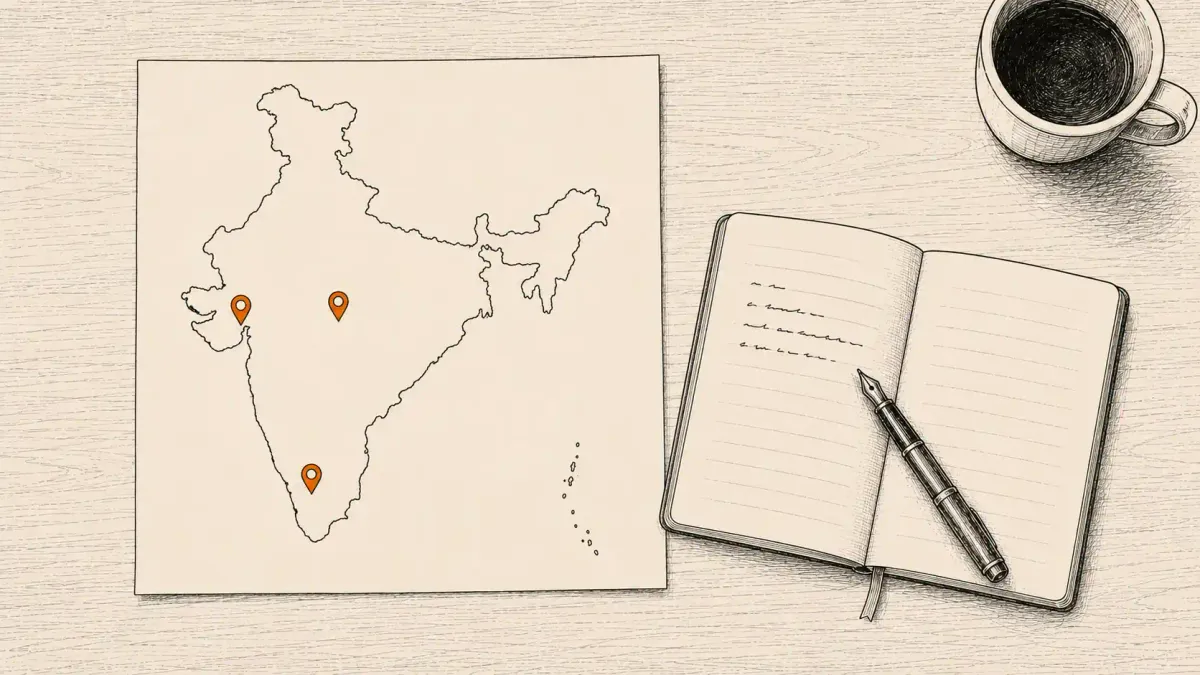
There’s a quiet shame that follows solo founders living outside Mumbai, Bangalore, Gurgaon, or Hyderabad. The assumption that being in Bharuch or Indore or Coimbatore means being too far from the action. Too far from investors, too far from talent, too far from the rooms where deals happen. The metro-founder Twitter timeline reinforces it daily.
It’s mostly wrong. Not because Tier-2 cities are magical, but because the specific math of a solo internet business breaks the geography assumption. A solopreneur billing ₹2-8 lakh a month from international clients, or running a SaaS with no employees, doesn’t need a Koramangala office. What they need is low burn, deep focus time, and a buyer base that isn’t sitting next door. Tier-2 delivers all three with embarrassing efficiency.
The burn-rate gap is bigger than people admit
A 2BHK in HSR Layout runs ₹45,000-65,000 a month before utilities. The same space in Indore’s Vijay Nagar runs ₹15,000-22,000. In Bharuch, closer to ₹8,000-12,000. That’s not a small lifestyle delta. For a solo founder pre-revenue or scaling slowly, it’s the difference between 8 months of runway and 24.
Compound that with food (a thali in Coimbatore that costs ₹80 costs ₹220 in Powai), transport, and the social tax of metro life (every weekend somehow costing ₹4,000), and the picture gets stark. A solopreneur in Tier-2 needs roughly 35-40% of the monthly revenue a Bangalore solopreneur needs to hit the same lifestyle. That’s the entire ballgame.
The counter-argument is usually “but networking.” Networking only matters if your customer is in that city. For most solo founders selling to US/EU clients on Upwork, Toptal, or cold outbound, or selling SaaS globally, the local network is a sunk social cost masquerading as strategy. The Bangalore founder paying ₹55,000 rent to “be close to the ecosystem” is mostly subsidizing other people’s startups by attending their pitch nights.
Bharuch: the industrial-buyer advantage nobody talks about
Bharuch sits in a weird and useful spot. It’s an hour from Surat, ninety minutes from Vadodara, and inside Gujarat’s chemical and textile industrial belt. The catchment of factory owners, traders, and Tier-2 manufacturing businesses inside a two-hour drive is genuinely massive, and almost none of them are being served by good software or good service providers.
For a solo founder building anything B2B-adjacent (bookkeeping automation, GST compliance tools, inventory software, WhatsApp-based ordering, marketing for local manufacturers) Bharuch isn’t a disadvantage. It’s a moat. A Bangalore SaaS founder can’t credibly walk into a Ankleshwar chemical plant and sell. A Bharuch founder can. The trust gap is real and it favours the local.
The trick is positioning. Don’t pitch as a “startup.” Pitch as a local operator who happens to build software. Owners in this belt don’t buy from pitch decks. They buy from people who showed up twice, didn’t waste their time, and asked the second-smallest question first. That’s a topic covered in the graduated B2B outreach ladder, and it maps cleanly onto Gujarat business culture.
What Bharuch lacks
Be honest about the gaps. There’s no real coworking infrastructure beyond a couple of café-style spaces. Fiber internet is patchy outside the main corridors (a Jio Fiber 300Mbps line is the practical floor). Direct flights are non-existent (Surat or Vadodara is the nearest serious airport). And the solo-founder peer group is thin (most of the founder community is on Twitter/X anyway, so this matters less than it sounds).
Indore: the operational-talent sweet spot
Indore quietly built itself into one of India’s most underrated talent pools. IIT Indore, IIM Indore, DAVV, SGSITS, plus a fat layer of engineering colleges feeding into the local economy. The supply of decent junior developers, designers, and ops people willing to work for ₹25,000-45,000 a month is real, and the attrition rate is dramatically lower than Bangalore (people aren’t getting poached by FAANG every six months).
For a solo founder ready to hire their first contractor or part-time helper, Indore is structurally cheaper and stickier than any metro. A junior React developer in Bangalore wants ₹70,000 minimum and will leave in eight months. The same skill level in Indore costs ₹30,000-35,000 and stays for two-plus years because the local opportunity set is thinner.
The other Indore advantage: the city itself is actually pleasant to live in. Clean (won the cleanest-city tag for years running), low traffic, reasonable weather, food culture that’s genuinely world-class for the price. A solo founder spending 10-12 hours a day at the keyboard needs the other 12 hours to not be punishing. Bangalore commute alone burns 90 minutes of cognitive bandwidth a day.
The Indore caveat
Indore’s weakness is international-client trust signaling. A client in San Francisco asking “where are you based?” hears “Bangalore” and thinks tech hub. Hears “Indore” and thinks where? This gets fixed with a clean website, a US/EU-friendly Calendly setup, and Stripe Atlas or a UK Ltd for invoicing. The actual workflow for solving this is in the India payments breakdown for Stripe, Razorpay, and Wise.
Coimbatore: the deep-domain advantage
Coimbatore is the most underrated of the three. The textile, pump manufacturing, and engineering goods cluster around it is one of the densest in India. PSG Tech and Amrita feed a serious engineering pipeline. The Tamil-speaking domestic market gives a 70-million-person buyer base that most North Indian solo founders can’t credibly serve.
The Coimbatore solo-founder profile that’s been quietly winning: vertical SaaS for textile mills, foundries, or pump manufacturers. ERPs that cost ₹15,000-40,000/month per customer. Customer counts in the 20-60 range. Annual revenue per founder in the ₹50-90 lakh band. Zero VC funding. Zero Twitter presence. Built quietly over 3-5 years.
The pattern that makes this work: founder knows the industry vocabulary (often because their family was in it), shows up in person twice a quarter, charges in INR, doesn’t try to scale beyond what one person can manage. It’s the opposite of the Bangalore hyper-growth template, and it produces better unit economics than 80% of funded startups.
The honest comparison: when Tier-2 is actually worse
Tier-2 is not universally better. Three scenarios where the metro wins clearly:
Hiring senior engineers (₹40 lakh+ CTC band). The pool simply isn’t deep enough in Tier-2 yet. If the business plan requires a senior backend engineer or an ML researcher, Bangalore or Hyderabad wins.
Raising venture capital. Indian VCs still strongly bias toward founders they can meet at WeWork BKC or Indiranagar. A Tier-2 founder raising a seed round will work twice as hard for the same cheque. If the business genuinely needs VC, this is a tax to budget for.
Selling to Indian enterprise. Mumbai BFSI buyers, Bangalore tech buyers, Gurgaon corporate buyers. These rooms reward physical proximity for procurement cycles that drag 6-9 months. Tier-2 founders can do it but at a real disadvantage.
For solo founders selling to SMBs, freelancing internationally, building niche SaaS, or running content/info businesses, none of those three scenarios apply. The metro premium is being paid for nothing.
The setup that makes Tier-2 actually work
A working Tier-2 solo founder stack looks something like this. Reliable fiber internet (Jio Fiber or ACT, 300Mbps minimum, plus a 4G backup on a separate SIM). A passport with a current US/Schengen visa for the 2-3 trips a year that matter. A Wise or Stripe Atlas setup for clean international payments. A Notion or ClickUp workspace for client work (the framework for picking is in Notion AI vs ClickUp for solo project management). A monthly travel budget of ₹15-25k for trips to Mumbai or Bangalore when in-person matters.
The mindset shift that’s harder than the setup: stop apologizing for the location. Don’t put “based in Bharuch, working with global clients” in the bio like it’s a defense. Just put the work. The location becomes a non-issue the moment the founder stops treating it like an issue.
What this actually means for the next 18 months
The cost of being a solo founder in a Tier-2 Indian city in 2026 is the lowest it has ever been, and the upside is the highest it has ever been. Remote work is normalized. Stripe and Razorpay handle international payments cleanly. Cold outbound on LinkedIn doesn’t care about pin code. The customer doesn’t care where the work gets done as long as the work is good.
The metros will keep being expensive. The peer pressure to move there will keep being loud. The real question isn’t whether Bharuch or Indore or Coimbatore can support a solo founder. It’s whether the founder can resist the social signal of metro life long enough to build something with the burn rate advantage they’ve been handed.
Most won’t. Which is exactly why the ones who do will own their niches for a decade.
For the operational side of running solo from anywhere, see the zero-dollar AI stack for solopreneurs and the seven mistakes first-year solopreneurs make.