The B2B Outreach Ladder for Solo Founders (2026)
Most cold B2B outreach fails the same way. The founder writes a perfectly polished first message, sends it to a prospect, and proposes a 30-minute call in the second-to-last paragraph. The prospect either ignores it entirely or replies with a polite “not right now.” The founder concludes the messaging doesn’t work and changes the subject line, the channel, the niche, the offer. None of it moves the response rate.
The actual problem isn’t messaging. It’s that the first message asks for too much. A 30-minute call is a 30-minute commitment, and you’re asking a stranger to hand it over before they have any signal you’re worth their time. The fix isn’t better copy. The fix is staging the asks across a sequence of increasingly committal steps where each step earns the next.
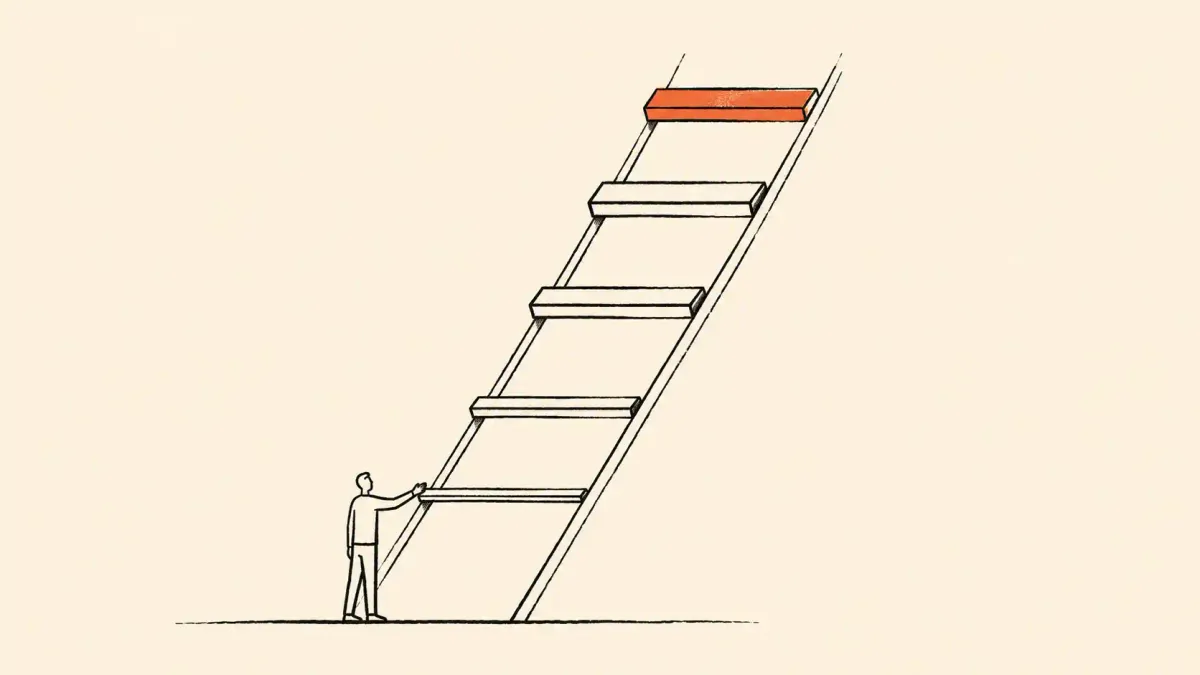
This is the version of the outreach ladder that works for solo founders in 2026, five steps, each one designed to honor what the prospect has agreed to so far, none of them jumping ahead.
Why graduated outreach is the only thing that works
In 2015, you could cold-email a director at a 500-person company with a clear pitch and a calendar link, and book a meeting in 30% of replies. That stopped working around 2020. Three things happened.
Inbox volume exploded. The average B2B decision-maker now receives 80-150 cold emails per week. They no longer triage by reading; they triage by patterns. Anything that pattern-matches to “salesperson trying to book a call” gets filed under low-priority on sight.
AI made personalization look fake. Tools like Lemlist, Smartlead, and a dozen “AI-personalized outreach” platforms made every cold email feel templated. A line like “I noticed you recently posted about scaling on LinkedIn” reads as obvious merge-tag work to anyone who’s seen ten of them.
The cost of saying yes went up. A 30-minute call now means rescheduling something else, prepping, and managing the social cost of saying no later if the pitch is wrong. Most decision-makers default to no for any commitment that requires more than two seconds of thought.
The response: stop asking for commitments. Start asking for permission to send the smallest possible next step.
The 5-step ladder
Each step has a specific goal: earn the right to take the next one.
Step 1: First touch (cold)
Channel: WhatsApp + email in parallel. The goal is interest detection, nothing more.
What to send: A short, specific pitch that takes 60 seconds to read. Open with how you found them and why their business specifically caught your attention. Three bullets on what your product does. One offer line (free trial, free pilot, free walkthrough). One question: “Worth knowing more?”
What NOT to send: A calendar link, a meeting proposal, a 30-minute call request, a long backstory about your company, or any reference to your team’s mission. None of that earns trust at step 1. It signals you’ve skipped the trust-building work.
Expected outcome: 5-15% reply rate when targeting verified contacts with a specific niche-fit pitch. Most replies will be “tell me more” or a specific question. Some will be “not interested” (still a win, they cleared their position). Most will be silence.
Mistake to avoid: Sending two messages in 48 hours when the first one didn’t reply. That signals desperation. Wait at least 5 days for a single follow-up.
Step 2: The walkthrough video (30-90 seconds)
Trigger: Prospect replies positively to step 1.
What to send: A short Loom or WhatsApp video showing the product working. 30-90 seconds total. Your face for the first 5 seconds (builds trust), then screen share for the rest. Show one or two specific features that solve a pain you mentioned in step 1.
What NOT to send: A 5-minute “demo” of every feature, a slide deck, a written PDF brochure, a calendar link “if you want to talk.” The video does the talking. After they watch, they’ll either ask follow-up questions or go quiet.
Why a short video specifically: Written follow-ups at this stage feel like you’re escalating to “convince” mode. Video keeps it casual, they’re watching, not reading. They can replay, share with a colleague, or close the tab. Low friction.
Expected outcome: 30-50% of prospects who replied at step 1 will engage with the video. About half of those will ask a specific question. The rest will go quiet and need to be marked for follow-up at the 5-7 day mark.
Mistake to avoid: Re-pitching in the video. The first message already pitched. The video shows the product working. If you re-pitch in the video, you’ve wasted the most valuable conversion asset you have.
Step 3: The brief call (15-20 minutes)
Trigger: Prospect asks a question that requires conversation, OR they explicitly ask for a call.
What to do: Propose a 15-20 minute call. Send 2-3 specific time slots, not a Calendly link. Calendly links read as transactional at this stage; named time slots read as personal.
On the call: Listen for 60% of the time. Ask what’s been frustrating about their current setup. Demo only what’s relevant to the specific frustration they describe. Resist the urge to show every feature.
What NOT to do: Schedule a 60-minute call. Send a long pre-call form to fill out. Bring a slide deck. Ask probing qualification questions designed to “qualify out” bad fits. At this stage you’ve already qualified them in by getting to step 3. Now your job is to listen and adapt the pitch to what you hear.
Expected outcome: 40-60% of prospects who took the call will agree to either a pilot or an in-person meeting at a follow-up date. The rest will say “let me think about it”, usually a polite no, sometimes a real maybe.
Mistake to avoid: Forcing a close at the end of the first call. A solo founder closing in the first call signals desperation. Let them decide and reply by themselves; offer the pilot or pilot offer as a clear ask but don’t push for a yes-no answer.
Step 4: The in-person meeting (only if needed)
Trigger: The call went well, but the deal size, complexity, or trust requirement warrants face-to-face. Not all deals need this step, small subscriptions and trial pilots can skip it.
What to do: Travel to them. Bring a one-page printed summary of what was discussed on the call plus the proposed next step. Bring a physical demo (laptop with the product loaded, phone with the mobile flow ready). Be prepared to walk through the product in real time.
What NOT to do: Show up empty-handed expecting to “just chat.” Bring a sales deck with 30 slides. Ask them to make a decision at the meeting. The meeting is for trust-building and answering deeper questions, not for closing.
Expected outcome: A clear yes or a clear “we’ll start the pilot next month” at the end of most in-person meetings. The conversion rate from this step to closed deal is 50-70% in B2B India for solo-founder products. The rest is timing.
Mistake to avoid: Treating the meeting like a sales presentation. It’s not. It’s a conversation between two business people deciding if they want to work together. Act accordingly.
Step 5: The pilot or trial
Trigger: They’ve said yes (or “soft yes, let’s try it”).
What to do: Move fast. Get them onboarded within 48 hours of agreement. Send a clean onboarding document, schedule a 15-minute setup call, give them a clear definition of “success” at the end of the trial period (usually 30 days).
What NOT to do: Use the pilot to upsell. Pile on more features than they asked for. Send daily check-ins. Treat the pilot as a sales opportunity. The pilot is a product opportunity. If the product works, the close is automatic.
Expected outcome: 50-80% of pilots convert to paid in B2B India, IF the product genuinely solves the problem they signed up to test. The other 20-50% don’t convert because either the product needed more development, the customer’s internal priorities shifted, or the initial fit was wrong.
Mistake to avoid: Treating a failed pilot as a personal failure. Most pilots that don’t convert give you the clearest possible feedback on what the product needs to win the next prospect. Use it.
What conversion looks like at each step
For a solo founder running graduated outreach with verified leads (not IndiaMART numbers, those are mostly noise):
| Step | Reply / engagement rate |
|---|---|
| 1 → 2 (first touch to interest) | 10-15% |
| 2 → 3 (video to call request) | 30-50% |
| 3 → 4 or 5 (call to commitment) | 40-60% |
| 5 → paid (pilot to subscription) | 50-80% |
End-to-end: roughly 1-3% of cold first-touches become paid customers within 60-90 days of first contact. That sounds low until you remember the alternative is 0% from sending 1,000 generic cold emails with a calendar link.
The math also gets dramatically better with each round of outreach because each round teaches you which messaging works, which niches respond, and which prospects ghost. By round 3, the rates above usually shift up 2-3 percentage points each.
The single mistake that kills the entire ladder
Skipping steps. Specifically, jumping from step 1 to step 3 by proposing a call in the first cold message.
The temptation is real. You want to talk to the prospect because conversation feels more “honest” than sending a video. But here’s what happens when you skip steps:
- The prospect hasn’t seen the product yet, so they can’t judge if a call is worth their time. They default to no.
- You haven’t earned the right to ask for their time. You’re asking strangers for 30 minutes.
- Even if they say yes, the call is now under-prepared because they don’t know what they’re saying yes to.
Stay on the ladder. Each step earns the next. The whole sequence works because of the order, not despite it.
What to track
Three numbers per round of outreach:
- First-touch reply rate (Step 1 → 2). Measures messaging quality + audience fit.
- Video engagement rate (Step 2 → 3). Measures product clarity + pitch alignment.
- Pilot conversion rate (Step 4 → paid). Measures actual product fit.
Each number tells a different story. A low reply rate means your messaging or your list is wrong. A high reply rate but low video engagement means the video isn’t matching the pitch. A high video engagement but low pilot conversion means you have a positioning problem at the call.
Solving each problem separately is much faster than trying to “fix outreach” as one undifferentiated mass.
The bigger pattern
B2B outreach in 2026 is fundamentally about respecting the asymmetry of attention. The prospect has 10,000 things demanding their time. You have one thing demanding theirs. The graduated ladder works because it accepts the asymmetry and earns attention step by step instead of demanding it upfront.
Solo founders who internalize this ladder ship faster, close more, and burn out less. Solo founders who keep proposing 30-minute calls in cold messages send 1,000 emails for every customer they close. Both can be true at the same scale of effort. The difference is the order of asks.
If you’re using IndiaMART, JustDial, or scraped lead data, the why IndiaMART and JustDial leads are broken piece pairs with this, your messaging only matters if the data is real. For the actual cold-email subject lines that pass the step 1 filter, see the patterns that get replies in 2026.