Late-Payment Recovery for Solopreneurs (The Script That Works)
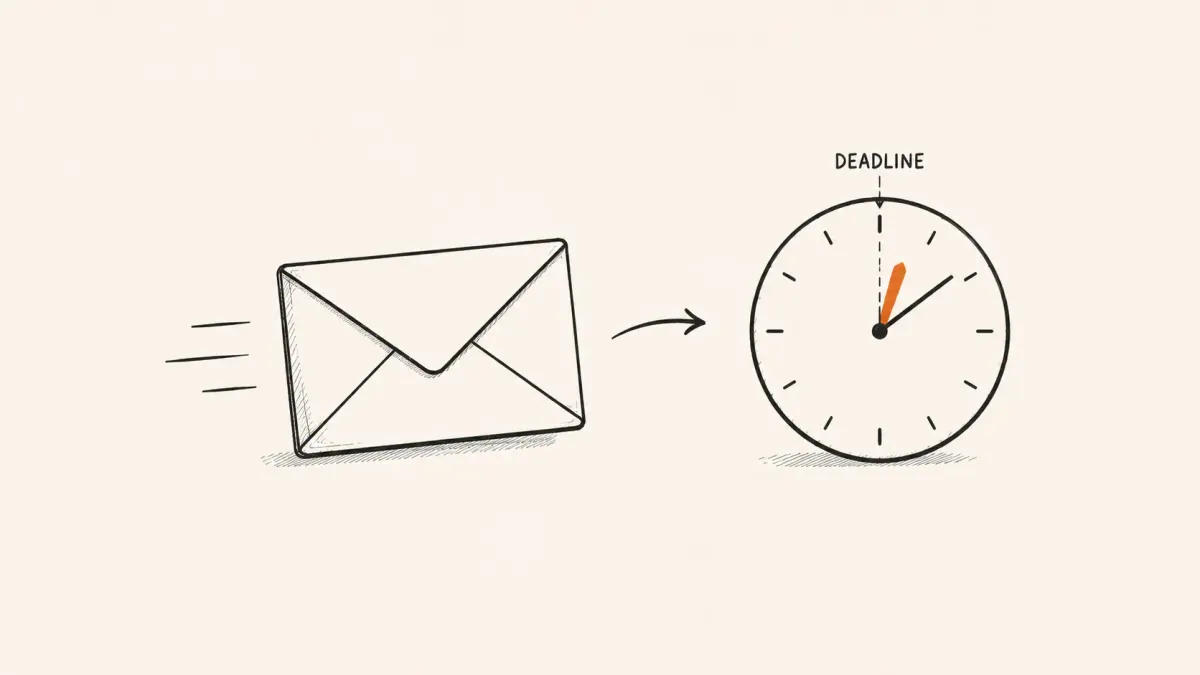
A ₹85,000 invoice goes out on the 1st. Net-15 terms. Day 16 arrives, nothing in the bank. The solopreneur sends a friendly nudge (“Just checking in!”) and gets a thumbs-up emoji back. Day 23, another nudge. Day 30, silence. Day 45, the client posts a new job opening on LinkedIn while the freelancer’s rent is overdue.
This is the default loop. Polite reminders get archived. The client isn’t malicious; they’re just running their own fires, and a freelancer who sounds apologetic about being paid sits at the bottom of the AP queue. The fix isn’t a harder tone. It’s a structured sequence with specific triggers, specific words, and a specific escalation point that most solopreneurs never reach because they confuse professionalism with passivity.
Why “polite reminders” fail by design
A reminder that reads “Hope you’re doing well! Just following up on invoice #042 whenever you get a chance” gives the client zero reason to act today. There’s no deadline, no consequence, no specific ask. It’s a wish disguised as a message. The client’s accounts team reads it as “low priority, no follow-through expected” and they’re usually right.
The second failure mode: solopreneurs treat each reminder as a fresh awkward conversation instead of a sequence. Each message starts from scratch, apologizes for following up, and resets the emotional cost to zero. The client learns that the freelancer will keep absorbing that cost indefinitely. So they do.
Real recovery rates change when the messages stop being individual pleas and start being a documented process the client can feel. Around 80% of late B2B invoices for solo operators get paid inside 14 days of a structured follow-up sequence. The remaining 20% need legal-adjacent pressure, and that’s a separate playbook covered at the end.
The 5-touch recovery sequence
The sequence runs from day 1 of lateness to day 30. Each touch has a job. Skipping touches breaks the escalation logic.
Touch 1: Day +1 (the same-day nudge)
Sent the morning after the due date. Tone is neutral, not apologetic. Resend the invoice as an attachment, not a link, because finance teams forward attachments and ignore links.
Subject: Invoice #042 due yesterday, quick resend
Hi [Name], invoice #042 (₹85,000) was due [date]. Attaching it again in case the original got buried. Could you confirm when it’ll be processed? Happy to share a different format if your AP team needs one.
Note what this does. It states the fact (overdue), removes a possible excuse (lost email), and asks a specific question that requires a date in the reply. No “hope you’re well.” No “just checking in.”
Touch 2: Day +5 (the named-person escalation)
If touch 1 got a thumbs-up but no payment, or got ignored, this one goes to a different person. The original contact stays cc’d. Add the founder, the operations lead, or the AP email if known.
Subject: Invoice #042, payment status
Hi [Name], following up on invoice #042 (₹85,000), originally due [date]. [Original contact] confirmed receipt on [date] but the payment hasn’t cleared. Could someone confirm the processing date by end of day Thursday? Looping in [Name 2] for visibility.
Cc’ing a second name changes the math for the original contact. They now have an audience. The “by end of day Thursday” gives a deadline that’s close but not aggressive. Most payments land here.
Touch 3: Day +10 (the calendar consequence)
This is the touch most solopreneurs refuse to send. It introduces the first real consequence: pausing work or pausing access. The wording matters.
Subject: Invoice #042, pausing work Monday
Hi [Name], invoice #042 is now 10 days overdue. To stay aligned with our agreement, I’ll be pausing all active work on [project] from Monday [date] until payment clears. This includes [specific deliverables in flight]. Let me know if there’s a blocker on your end I can help unblock.
Two things are happening. The freelancer is signaling that the relationship has terms, and offering to help solve the blocker (which sometimes is real: a stuck approval, a vendor onboarding form, a missing PO number). About 40% of stuck payments resolve at this stage because the client realizes the cost of the pause is higher than the cost of the invoice.
Touch 4: Day +15 (the late fee or interest line)
If the contract or invoice T&Cs include a late fee (and they should, 1.5% per month is standard), this touch activates it. If they don’t, this touch references the GST/MSME 45-day rule for Indian clients, which is real legal leverage.
Subject: Invoice #042, late fee applied + revised total
Hi [Name], per the terms on invoice #042, a late fee of ₹1,275 (1.5% of ₹85,000) has been added. Revised total: ₹86,275. New invoice attached. If [registered as MSME], please also note that under the MSMED Act, payments past 45 days carry compound interest at 3x the RBI bank rate. Happy to discuss a payment plan if cash flow is the issue.
The “happy to discuss a payment plan” line is critical. It separates can’t-pay clients from won’t-pay clients. Can’t-pay clients will engage with the offer. Won’t-pay clients won’t reply, which tells you it’s time for touch 5.
Touch 5: Day +25-30 (the final notice)
Short, formal, dated. This is the message that goes to legal counsel if it gets ignored.
Subject: Final notice, Invoice #042
Hi [Name], this is a final notice for invoice #042 (revised total ₹86,275), now 25 days overdue. If payment is not received by [date, 7 days out], the matter will be escalated to [legal counsel / MSME Samadhaan portal / collection agency]. Please treat this as urgent.
No softeners. No “hope we can resolve this.” The tone matches the situation.
The two lines most freelancers won’t say but should
Two specific phrases recover more invoices than any other wording, and most solopreneurs avoid them because they feel rude.
“I’ll be pausing work on Monday.” This is the single highest-leverage sentence in the entire sequence. It converts an abstract debt into a concrete operational cost the client feels this week. Don’t soften it with “I might have to” or “I may need to.” State it as a scheduled event.
“Is there a blocker on your end?” This costs nothing and surfaces real information. A stuck PO, a finance team on leave, a vendor form nobody mentioned. About one in three late payments has a fixable cause that the client was too embarrassed to raise. Asking gives them an out that doesn’t require admitting fault.
What to do before any of this is needed
The recovery sequence works 80% of the time. The other 20% is prevented at contract stage, not chased at invoice stage. Three changes do most of the work.
Charge a 40-50% deposit. Non-negotiable for new clients, standard for repeat ones above ₹50,000. A client who won’t pay a deposit is a client who won’t pay an invoice. Filtering happens upfront or it happens at month +2 with no leverage.
Use a payment processor with auto-reminders built in. Razorpay or Stripe handle the India-vs-global split and both send automated nudges on day 1, day 7, day 14 without the freelancer having to draft anything. The emotional cost of follow-up drops to zero, which means it actually happens.
Bake net-15 terms and a 1.5% monthly late fee into every contract. Not every client will pay the late fee, but having it written gives the touch-4 message legal weight. Tools like Notion as a lightweight CRM and contract store make this a 10-minute setup, not a project.
When the script doesn’t work
Some clients are structurally bad payers. Series-A startups burning runway, agencies that won’t pay until their client pays them, founders who view freelancers as last-priority creditors. The script gets the money 80% of the time, but the remaining 20% needs a different gear.
For Indian B2B clients, the MSME Samadhaan portal is the underused weapon. Registered MSMEs (the freelancer registers as one for ₹0 on the Udyam portal) can file a complaint for any payment overdue past 45 days. The client is legally required to respond within 90 days or face proceedings. The mere threat of filing recovers most ₹50,000+ invoices because Indian companies don’t want an MSME complaint on their books during due diligence.
For global clients, the equivalent is small-claims court in their jurisdiction, or a collection agency that takes 25-40% of the recovered amount. Both are last resorts. The point of the structured sequence is to settle 80% of cases before either becomes necessary.
The shift that actually matters
Late-payment recovery is not a writing problem. It’s a process problem disguised as a writing problem. The freelancers who get paid on time don’t have better-worded reminders; they have a sequence that runs whether they feel like sending it or not, with consequences that escalate on a calendar instead of on a mood.
Set the sequence up once. Drop it into a template doc. When an invoice goes 1 day late, open the doc, change the name, send touch 1. No drafting from scratch. No agonizing over tone. The professionalism is in the system, not in the individual message.
The clients who pay on time will keep paying on time. The clients who needed the structured push will start paying faster after the first time they see it. The clients who don’t respond even to touch 5 are clients the solopreneur didn’t want anyway, and the script has filtered them out by day 30 instead of day 90.
For more on protecting the relationship side of solo client work, see how to fire a bad client without burning the bridge and the B2B outreach ladder that fills the pipeline with better-paying ones.