Why IndiaMART and JustDial Leads Are Broken in 2026
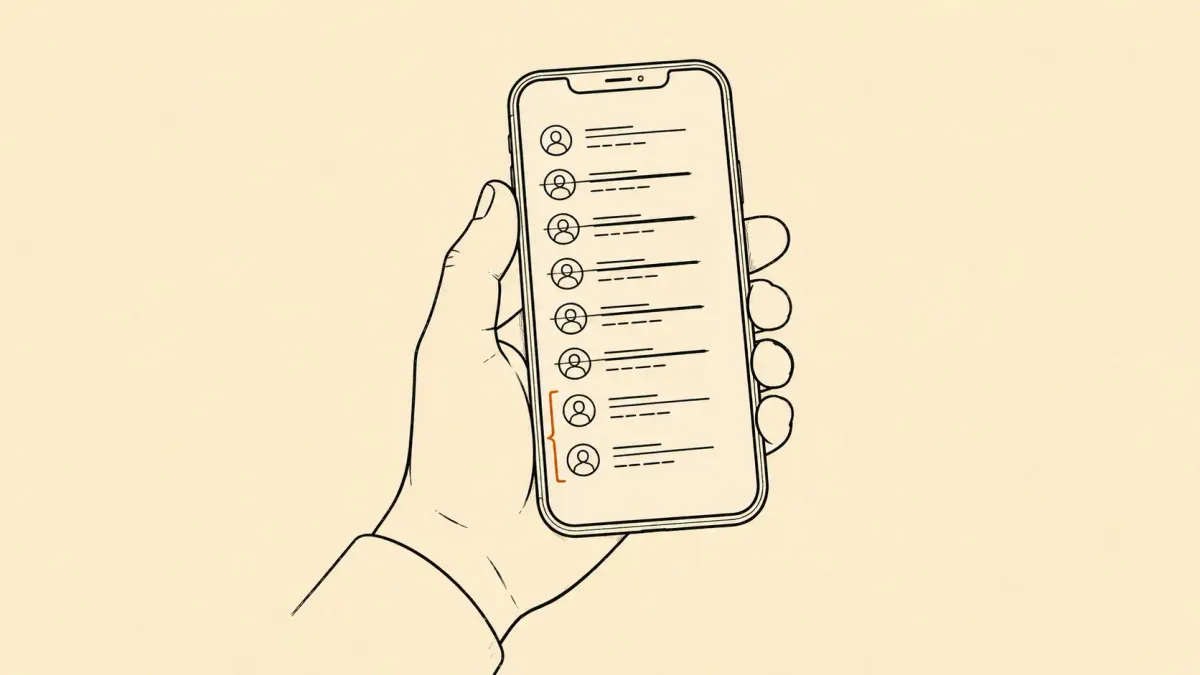
Most B2B prospecting guides for India still recommend IndiaMART and JustDial as the default lead sources. It’s the advice every solopreneur, freelancer, and bootstrapped founder hears in their first week. Pull a list, message the contacts, build a pipeline. Simple.
The advice was correct in 2018. By mid-2026 it’s broken in two specific ways that nobody calling these out is honest about. Cold outreach to IndiaMART-sourced leads has a near-zero response rate not because your messaging is bad, but because the contacts on the other end either don’t exist or haven’t checked that listing in five years. Same for JustDial. The “10,000 verified suppliers” branding does not survive contact with reality.
This is the honest version. What’s actually happening, why it’s structural, and the four prospecting paths that work for solo founders in 2026 instead.
The two failure modes
Failure mode 1: the data is years stale.
Pull a random sample of 50 supplier listings from IndiaMART in any major category, FMCG distribution, machine parts, textile wholesale. Click “Get Best Price” or extract the phone number via the platform’s free-tier flow. Cold call or WhatsApp each one.
The realistic outcome in 2026: 40-60% of those numbers either don’t connect, route to someone who has no relationship with the listed business, or land on a phone owned by a relative of the original owner who has long since moved cities or shut the business. JustDial’s numbers are slightly better, but the same pattern holds at smaller percentages.
The reason: IndiaMART’s incentive is to maximize listing count, not to verify ongoing accuracy. Suppliers who paid for a Premium listing in 2019 are still listed in 2026 even if they closed in 2021. The platform has no business reason to mark old listings dead because each listing inflates the “10 million+ suppliers” claim that sells advertising to brands.
Failure mode 2: a meaningful fraction of contacts were never real.
This is the harder one to talk about. The scraping and data-broker economy that operates around IndiaMART, JustDial, and IndianYellowPages routinely injects fabricated entries that look plausible, generic names like “RK Traders” or “Shri Enterprises”, numbers from valid mobile prefixes, addresses that match a real industrial area. These get into the platforms via paid listing services that operate in volume, and they’re nearly impossible to filter from genuine entries from the outside.
When you cold call a fabricated entry, you get a wrong number, a non-existent business, or a person who has no idea what you’re talking about. After the third or fourth call like this, most solo founders quietly conclude that “Indian B2B cold outreach doesn’t work.” It does work. The data source is broken.
Why this is structural, not fixable
A few honest reasons this won’t improve:
The platforms profit from listing volume, not data quality. IndiaMART’s revenue model rewards advertisers who want to reach “10 million suppliers.” A pruned list of 2 million verified active suppliers would be more useful but a worse commercial pitch.
Verification is expensive. Calling 10 million phone numbers annually to confirm businesses are still operating would cost more than the platform’s annual profit. So they don’t. Suppliers self-declare; nobody audits.
The supplier-side incentive is also broken. A wholesaler in Surat who listed on IndiaMART in 2019 has zero reason to update the listing in 2026, the platform stopped sending them buyer inquiries years ago when the algorithm shifted to favor paid listings. So old listings just sit there until they hit the 10-year auto-purge.
Data brokers exploit the gap. Scraping aggregators sell “verified” IndiaMART data sets to bootcamps and growth agencies, pollute the scraped data with synthetic entries to inflate row counts, and the synthetic entries leak back into the main platforms via reverse-listing services. The cycle is locked in.
The result: anyone trying to use these platforms for B2B outreach in 2026 is competing for response rates against a pool that’s 40-70% noise. You can’t out-write that. You can’t out-personalize that. The data is the bottleneck.
What actually works in 2026
Four real alternatives that solo founders are using to build B2B pipelines in India right now. None require expensive SaaS subscriptions.
1. Direct company website hunting
The single highest-quality lead source in 2026. Pick a target industry and a target city. Search Google for the industry term plus the city plus “pvt ltd” or “private limited” or the specific business form. Real companies that have invested in a real website (even a simple WordPress one) are almost always actively operating, because dead businesses don’t pay domain renewal fees.
On each company’s site, the Contact page typically has a verified phone, a real email (often a custom domain, sometimes a Gmail), and a real business address. These contacts work. The reply rate is 5-10x higher than IndiaMART numbers for the same outreach script.
Trade-off: slower to build a list, you’ll find 5-10 prospects per hour instead of 100. The conversion math still wins.
2. Apollo.io free tier
Apollo’s free tier provides 50 verified contacts per month. The verification is genuine, they cross-reference against active business databases, LinkedIn signals, and email-validation services. Filter by India + target industry + decision-maker job titles (“Owner”, “Proprietor”, “Director”), export to CSV, work the list.
50 contacts a month sounds like a small number until you compare it to “100 unverified IndiaMART numbers with 5 working contacts.” Apollo’s 50 verified contacts will outperform 1,000 IndiaMART numbers on response rate.
For India specifically, Apollo’s coverage is better in metros (Bangalore, Mumbai, Delhi NCR, Hyderabad, Pune) than in Tier-2 cities, but improving every quarter.
3. Industry-specific community sources
Facebook groups, WhatsApp groups, and Telegram channels for specific Indian industries are surprisingly active and surprisingly under-mined for outreach. Groups like “Surat FMCG Distributors”, “Mumbai Restaurant Suppliers”, “Bangalore SaaS Founders” exist, are moderated by real people, and member lists are real people running real businesses.
The play: join, introduce yourself, contribute genuinely for 2-3 weeks before any outreach. Then DM members whose businesses match your target. Conversion rate from a Facebook group DM (preceded by genuine community presence) is 3-5x higher than cold email to the same person, because the prospect already vaguely recognizes you.
The cost is patience. The cost is also zero rupees.
4. Local trade associations
Every Indian industry has a state or district trade association. FMCG distributors have AIFTBA. Wholesale grocery markets have APMC committees. Restaurant suppliers have RAIA. These associations maintain member directories that are kept current because membership fees depend on accuracy.
Most associations don’t publish the directory online, but they will share it with verified members or with vendors who attend their events. The play: pay the small annual membership fee (₹500-5,000 depending on the association) if you’re eligible, OR attend one event in person and network into the directory access from there.
This is the highest-quality source possible for established, professionally-run distributors in any specific industry. The friction is real, you have to actually show up to the association event or pay to join. The payoff is contact data nobody else can scrape.
The graduated outreach ladder (because the data quality matters less if you handle the outreach wrong)
Once you have verified contacts from any of the four sources above, the next failure mode is sending the wrong type of first message. Cold first-touch should ONLY gauge interest. The right ladder:
- First touch (WhatsApp + email): brief value-prop pitch, CTA = “want to know more?”
- 90-second walkthrough video (sent only if they reply yes to step 1)
- Short call (only after they engage with the video positively)
- In-person meeting (only after a successful call)
- Pilot / trial (only after a successful meeting)
The mistake almost every first-time B2B founder makes: proposing a meeting or in-person visit in the first cold message. That asks for a 30-minute commitment from someone who hasn’t decided you’re worth their attention yet. The interest-only CTA at step 1 fixes this. The follow-up sequence at steps 2-5 honors their time at each step.
A clean WhatsApp first-touch looks like this:
Kem chho [Name] ji, [Your name] here from [Your company]. Saw [their company] online. We built [product] for [their type of business]. Three things it does specifically well: [bullet 1], [bullet 2], [bullet 3]. Free pilot for 30 days, no setup cost. Worth knowing more?
Five lines. Specific. Includes the offer. Ends with the lightest possible ask. This pattern outperforms every “AI-personalized” outreach template SaaS tool that costs $200/month.
What this means for solo founders building B2B in India
Three honest takeaways for anyone trying to build a B2B pipeline in India in 2026:
Stop relying on IndiaMART and JustDial as primary lead sources. They had a moment in 2015-2019. That moment is over. Use them only for company name discovery, then verify everything else externally.
The real bottleneck isn’t lead quantity, it’s lead quality. Five real verified prospects from a company-website hunt convert better than 200 scraped IndiaMART numbers. Spend the hour finding the five, not the four hours messaging the 200.
B2B India is still the right market. The complaint here is about lead data infrastructure, not about Indian B2B itself. Indian SMBs and distributors have real budgets, make real decisions, and respond to genuine outreach when it reaches them through verified channels. The market is alive. The popular lead sources are dead.
If you’re a solopreneur or freelancer running B2B outreach in India right now and getting zero responses despite “doing everything right” on the messaging side, the data is almost certainly your problem. Switch sources for a week, send 20 messages to verified contacts, and watch the response rate move.
If you’re doing cold outreach in India, the cold email subject lines that get replies in 2026 piece pairs with this one. For freelancers thinking about pricing the work that comes from this outreach, the hourly rate framework is the next read. More India-specific solopreneur playbooks on the blog.